Job costing for contractors: the spreadsheet method
Materials, labor, subs, overhead — every job has four buckets, and the ones that lose money are the ones where the buckets got mixed.
Most contractors price jobs by gut feel, then discover their real margin eight months later at tax time — when it's too late to do anything about it. Job costing fixes that, and it doesn't need software. It needs one disciplined sheet.
Why gut-feel pricing fails quietly
The gut is trained on materials lists and hourly rates, and it's decent at both. Where it systematically fails is everything around them:
- The free work. Cleanup time, loading the truck, the third trip to the supplier, the warranty visit three months later. Gut-priced quotes don't include them; your hours absorb them invisibly.
- The pass-through trap. Materials "at cost" feel safe — until you account for the sales tax you eat, delivery fees, the 10% extra cut pieces, and the client who "just needs one small extra thing" while you're on site.
- The survivor bias. Gut pricing is calibrated on jobs that felt fine. The ones that lost money get forgotten; the pricing never updates.
The result is the contractor's classic: busy every week, broke every quarter. Revenue is real; margin was never actually measured.
The per-job sheet: four numbers and one habit
Job costing means every job gets priced in four buckets, then compared against reality after:
1. Labor: hours × loaded rate. Loaded means what an hour of you-or-your-guy costs, not what you'd like to earn — wage + taxes + insurance divided by billable hours.
2. Materials at cost, then deliberately marked up (15–30% is normal, not greedy). You're being paid to source, haul, warranty, and guarantee them.
3. Subcontractors, quoted to you, plus your coordination margin.
4. Overhead allocation: fuel, tool wear, insurance, the months of slow work. A flat percentage of job cost (10–20%) is crude and vastly better than zero.
Then: quoted vs actual side by side, per bucket, for every completed job. That last column is the entire education. Three jobs in, you know your cleanup time is real. Ten jobs in, you know which material category always runs over. Gut pricing can't learn; the sheet learns by design.
The change-order rule that saves margins
Scope creep is where contractor margins go to die, one "while you're at it" at a time. The sheet makes the fix mechanical: anything not in the quoted bucket list is a change order, priced the same way, approved in writing (a text message counts) before the work. The discipline isn't legalistic — it's that you have a costed quote to point at, so "small extras" get discussed in minutes, not resented for weeks.
Pricing the job: cost is not the price
Cost comes out of the sheet; price comes from cost plus margin, and margin is a decision, not a leftover:
- Repairs and small jobs: 35–50% margin — clients compare convenience, not quotes.
- Renovations: 20–35%.
- New construction / competitive bids: 10–20%, where knowing your true cost is the whole game.
Set margin per job type once. The formula does the rest: `price = cost × (1 + margin)`, tax on top where applicable. When a bid needs to come down, the sheet shows exactly which concession you're making — labor, materials markup, or overhead — instead of shaving margin invisibly.
The trap to avoid: winning the wrong job
The sheet's quiet superpower: before you submit a bid, the costed total is sitting next to your calendar. A job that eats three weeks at a 12% margin in your busy season has a real cost — the profitable work it displaces. Contractors who see that number on paper start declining jobs, and their effective hourly rate goes up while working fewer hours. That's the entire business, improving on one screen.
The shortcut
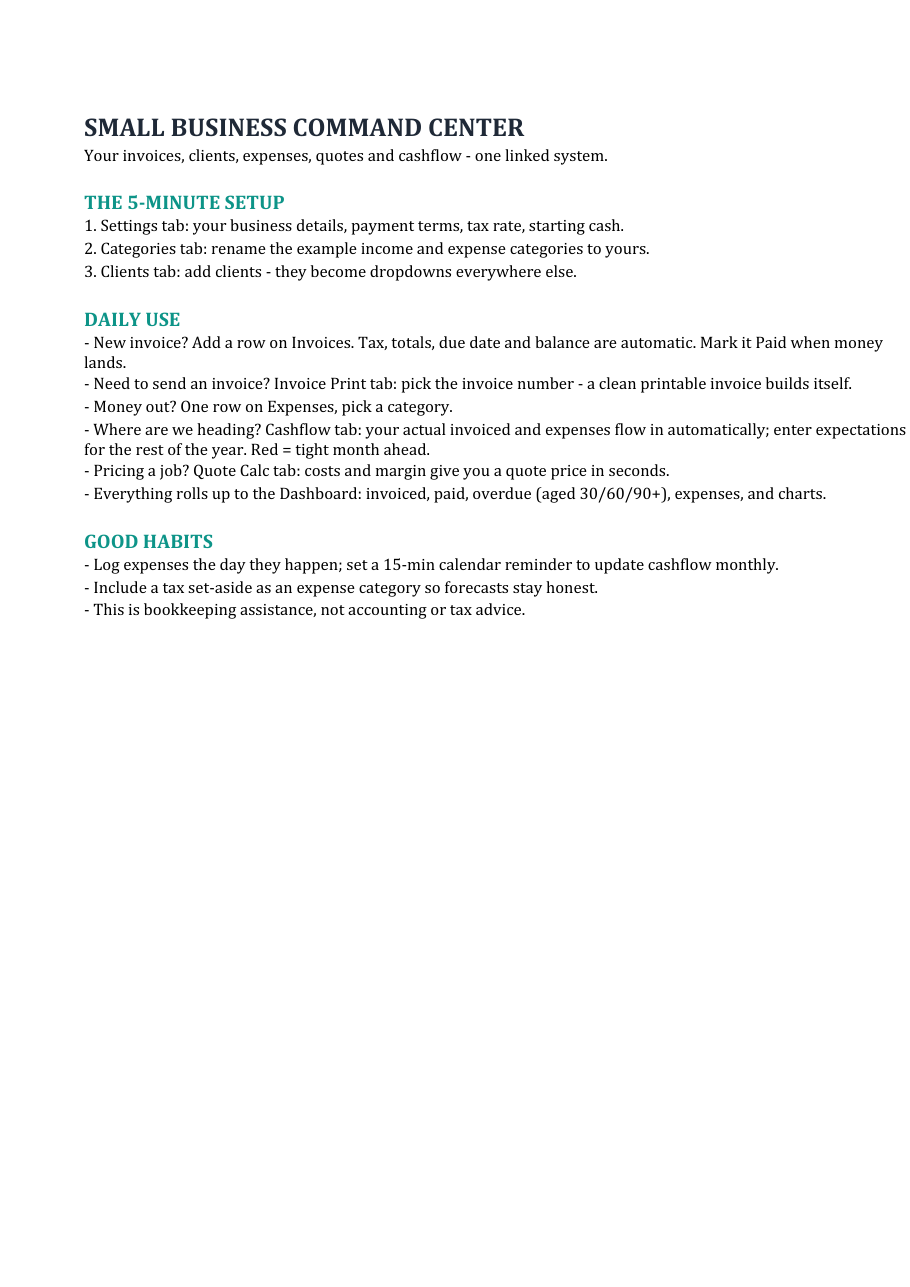
The Quote Calculator inside the Small Business Command Center does the four-bucket costing, per-line margins, tax, and grand total — pick the client, enter lines, get a price. It feeds the same system that tracks the invoices that job generates, so quoted-vs-actual becomes automatic at the business level, not just per job.
Standalone, the 12-month cashflow forecaster (free on the same page) answers the other contractor question: which months the money actually lands, and when the gap between "work done" and "invoice paid" starts hurting.
---
This is costing and planning assistance, not accounting or tax advice. Works in Excel and Google Sheets.